Category: Architecture
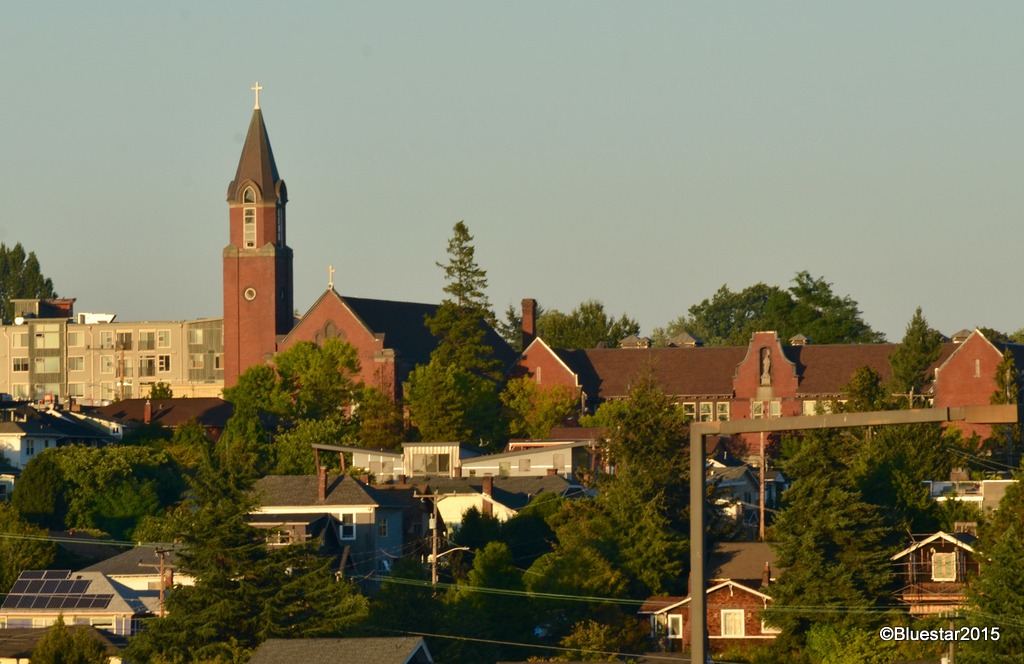
West Seattle Church


In a rundown state. Even the stained glass windows look like they have been neglected for some time.
History Intertwined


In 1962 Seattle architect Paul Thiry did the design of some of the buildings at the Worlds Fair. Just as a side note, he also designed a house less than a mile from my home, on Marine View Drive, in Arbor Heights ( image above). The image of the NW Rooms refers to a series of rooms in a building Thiry designed. Today those rooms are no longer named NW Rooms, but are being used by SIFF and The Vera project, among others.
One of the rooms was called The Nisqually Room. In 1970, a band I was in played one or maybe two nights for some event ( I’ve been told it was a after-concert party for the All City Band in Seattle. I think we owed the music teacher of our high school a favor for letting us practice in his home basement and school music room. Mr. Terpenning was only a few years older than us and was supportive of what we were doing-which didn’t seem too odd at the time, but now……?). That was probably the largest room we ever played. The ceiling was so high the sound went everywhere at once and kind of morphed into something long and echoing.
The article in the link does not say what the Nisqually Room morphed into over the years. It may have been combined with an adjacent room. I have walked up and down the steps and around this set of rooms and my memory says one thing and the physical structures say another.
Anyways, I thought it was interesting that my history and that of Paul Thirys’ met 8 or so years after his design and contribution to the Worlds Fair in 1962.


Art Deco
Some of the Art Deco touches on the art museum in Volunteer Park, Seattle.


The House on the Hill: Pt. II
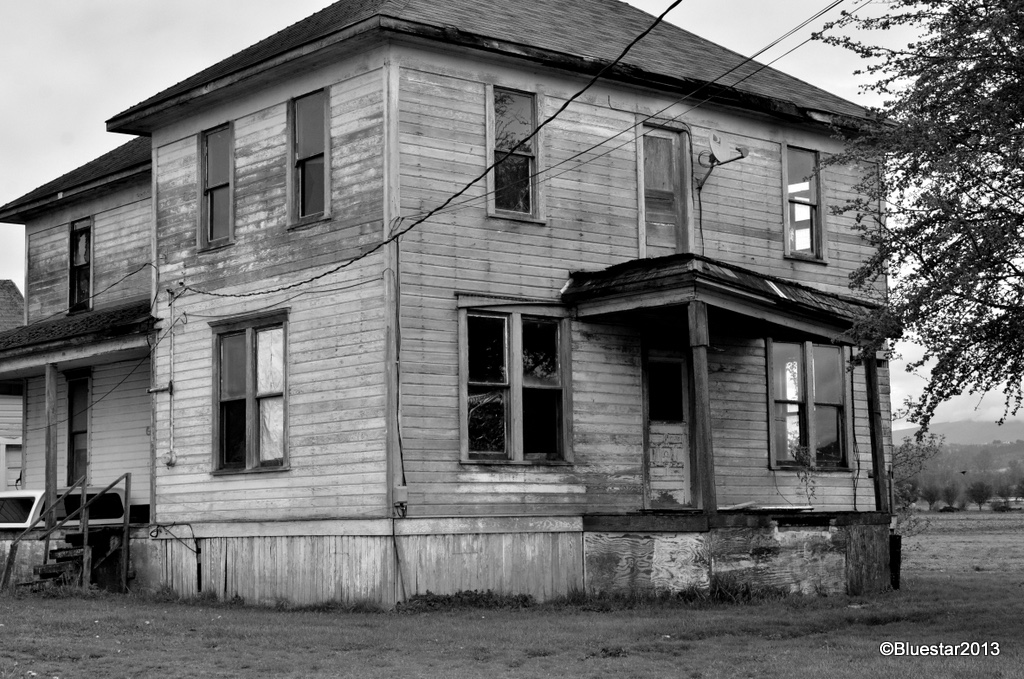
My second visit to the House on the Hill in South Park, Seattle. Due to waist-high debris it was impossible to get more than a couple of feet inside the house. The interior is severely burned; it smells and is very unsafe. On the outside there is broken glass everywhere in addition to piles of debris. At one time this was a house with a view of Downtown Seattle in the distance as well as the Duwamish River nearby. I don’t know what “Skin Trap House” means, so if anyone has any ideas…. feel free to comment. The ground floor of the interior looks more like a dumping ground than anything else; perhaps after the fire people just repurposed the house? A good percentage the debris is not fire damaged. The image of the stairs leading to the second floor I found most appealing and engaging.
Full Circle

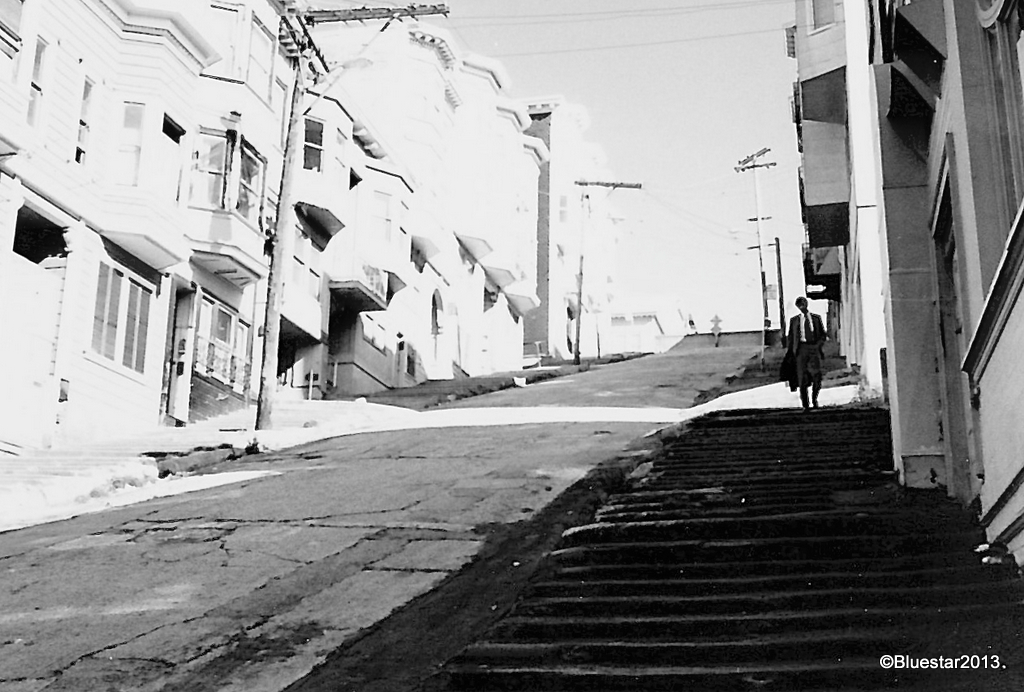
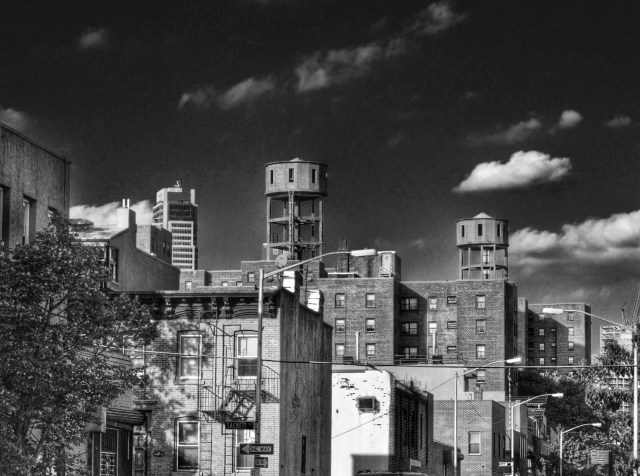
Two images, nearly 45 years apart, explore the same theme. One way to portray the human sense of aloneness is to put the subject alone in a large context, almost to the point of being almost meaningless, hard to find. The subject in this context is either not whole ( as in the Coney Island image) or is stepping into the shadow ( as in the Telegraph Hill image from 1970). Most photographers would explore this theme by focussing closely on the subject, as in a portrait with certain facial expressions to convey the theme. In both of these images the viewer is forced to look longer and closer to find the subject. To further emphasize the theme I picked places that are normally associated with lots of human traffic and times when that traffic might be minimal or non-existent.
Just as an aside: To shoot both of these images I used the same strategy, that is planting myself and camera in a location, waiting for the image/shot to come to me. This, too, is contrary to what is generally taught in photo classes; they always stress scouting your location ahead of time and going out with a plan of what you want to shoot. All good and well, but sometimes breaking the rules allows for surprising results.
Normally I let my images do the “talking” and let people decide what they see and how they see it. With these two images I got a sense of personally coming full circle, something a few words, would help to explain how they came about and how my perceptions are formed.
Two Fields

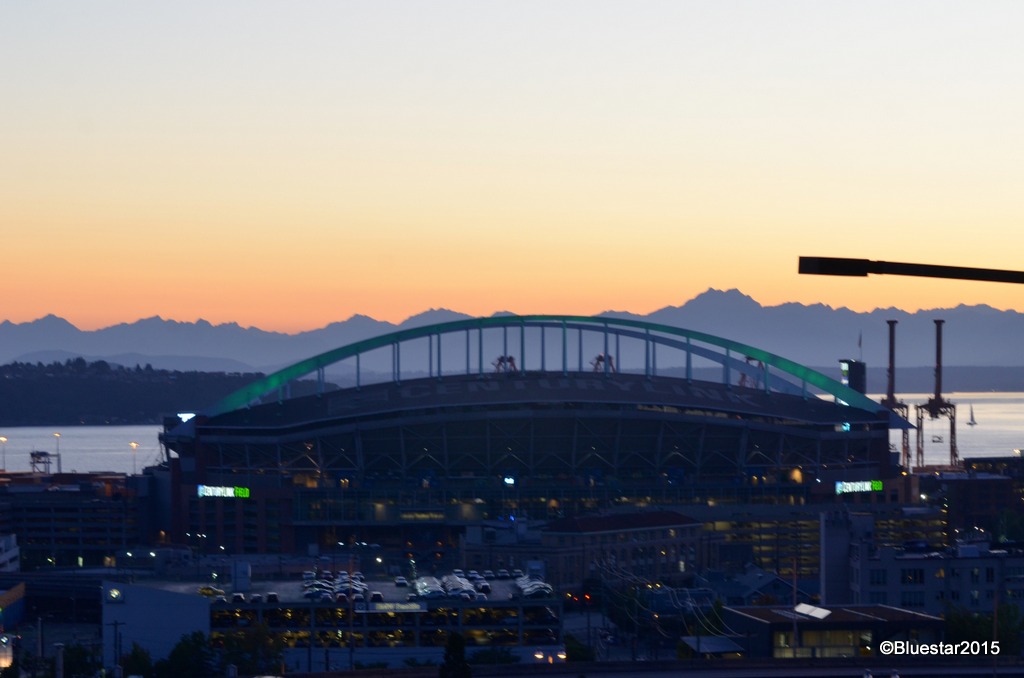
Safeco Field, home of the Mariners, and CenturyLink Field on the right, home of the Sounders and Seahawks.

Triangle Building


I’ve always been fascinated by this building in the Georgetown neighborhood of South Seattle. Also, the two old street lamps add something to the ambience. One day I will have to talk my way into the building just to have a look/see.
In the Background

The Brooklyn Bridge in the far background.
Old and New

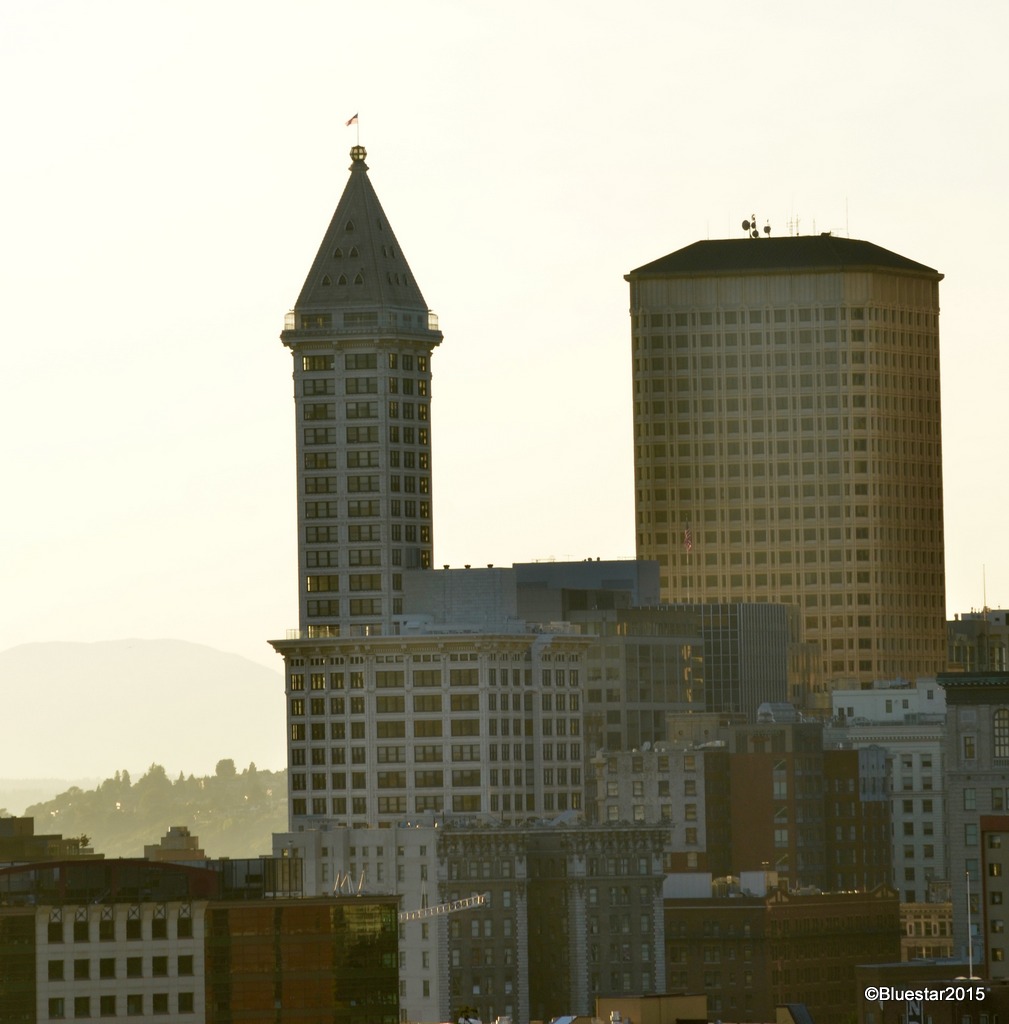
The Columbia Tower, on the left, and Smith Tower on right, at dusk. I was quite a distance from the subjects, but used a 70mm-200mm lens. Still lacking some detail I was hoping for.
Triangle Building


Located in the Seattle neighborhood of Georgetown .
Seattle at Dusk


I-5 curves its way through Seattle on the East side of the core downtown area.