

Tag: Thoughts
History Intertwined


In 1962 Seattle architect Paul Thiry did the design of some of the buildings at the Worlds Fair. Just as a side note, he also designed a house less than a mile from my home, on Marine View Drive, in Arbor Heights ( image above). The image of the NW Rooms refers to a series of rooms in a building Thiry designed. Today those rooms are no longer named NW Rooms, but are being used by SIFF and The Vera project, among others.
One of the rooms was called The Nisqually Room. In 1970, a band I was in played one or maybe two nights for some event ( I’ve been told it was a after-concert party for the All City Band in Seattle. I think we owed the music teacher of our high school a favor for letting us practice in his home basement and school music room. Mr. Terpenning was only a few years older than us and was supportive of what we were doing-which didn’t seem too odd at the time, but now……?). That was probably the largest room we ever played. The ceiling was so high the sound went everywhere at once and kind of morphed into something long and echoing.
The article in the link does not say what the Nisqually Room morphed into over the years. It may have been combined with an adjacent room. I have walked up and down the steps and around this set of rooms and my memory says one thing and the physical structures say another.
Anyways, I thought it was interesting that my history and that of Paul Thirys’ met 8 or so years after his design and contribution to the Worlds Fair in 1962.
Post-Industrial America
 A
A
Idle crane at an abandoned scrap yard in South Seattle.
Same River, Sixty One Years Later


The photo on the left is of me in 1955 taken along the Duwamish River in South Park, Seattle, where we lived at the time. The photo on the right is of my grandson taken this week along the same river. Some things don’t change too much over time.
Park and Fly
 In an effort to reduce on street parking, the City of Seattle has sanctioned rooftop parking for certain vehicles.


Full Circle

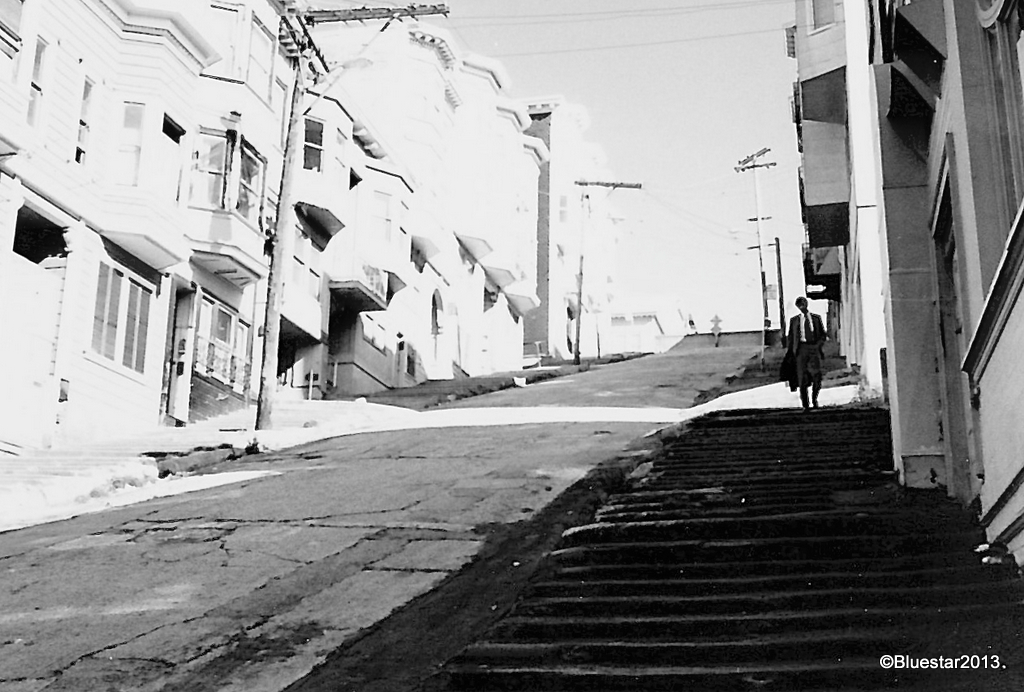
Two images, nearly 45 years apart, explore the same theme. One way to portray the human sense of aloneness is to put the subject alone in a large context, almost to the point of being almost meaningless, hard to find. The subject in this context is either not whole ( as in the Coney Island image) or is stepping into the shadow ( as in the Telegraph Hill image from 1970). Most photographers would explore this theme by focussing closely on the subject, as in a portrait with certain facial expressions to convey the theme. In both of these images the viewer is forced to look longer and closer to find the subject. To further emphasize the theme I picked places that are normally associated with lots of human traffic and times when that traffic might be minimal or non-existent.
Just as an aside: To shoot both of these images I used the same strategy, that is planting myself and camera in a location, waiting for the image/shot to come to me. This, too, is contrary to what is generally taught in photo classes; they always stress scouting your location ahead of time and going out with a plan of what you want to shoot. All good and well, but sometimes breaking the rules allows for surprising results.
Normally I let my images do the “talking” and let people decide what they see and how they see it. With these two images I got a sense of personally coming full circle, something a few words, would help to explain how they came about and how my perceptions are formed.
More like a Journal Entry….
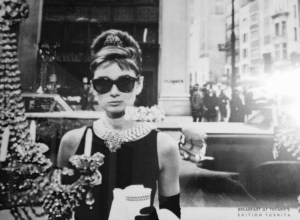
Thirty years ago I bought this poster from a poster and frame shop on Capital Hill, in Seattle. I had it mounted into a plexiglass cover. The minute I saw it I knew I wanted to buy it. I didn’t have my checkbook on me so drove home and back to the shop. A week or so later I picked up the finished item.
Although an iconic movie print, it has always meant much more to me. Audrey Hepburn exemplified grace and dignity. A wonderful actress who had a pretty scary childhood, she seemed to meet each challenge with pluck and a steely determination. Her last years, while battling ovarian cancer, were spent volunteering her services in Africa. By then she was nearly as skeletal-looking as the children she reached out and touched, yet she endured and shone like a beacon of hope to those children. She died much too young, at age 63. I am 63.
In the last thirty years she has kept me company and reminded me that, although we all have personal and health issues, we can still carry ourselves with grace and dignity and treat others with needs the same.
Flower of Life
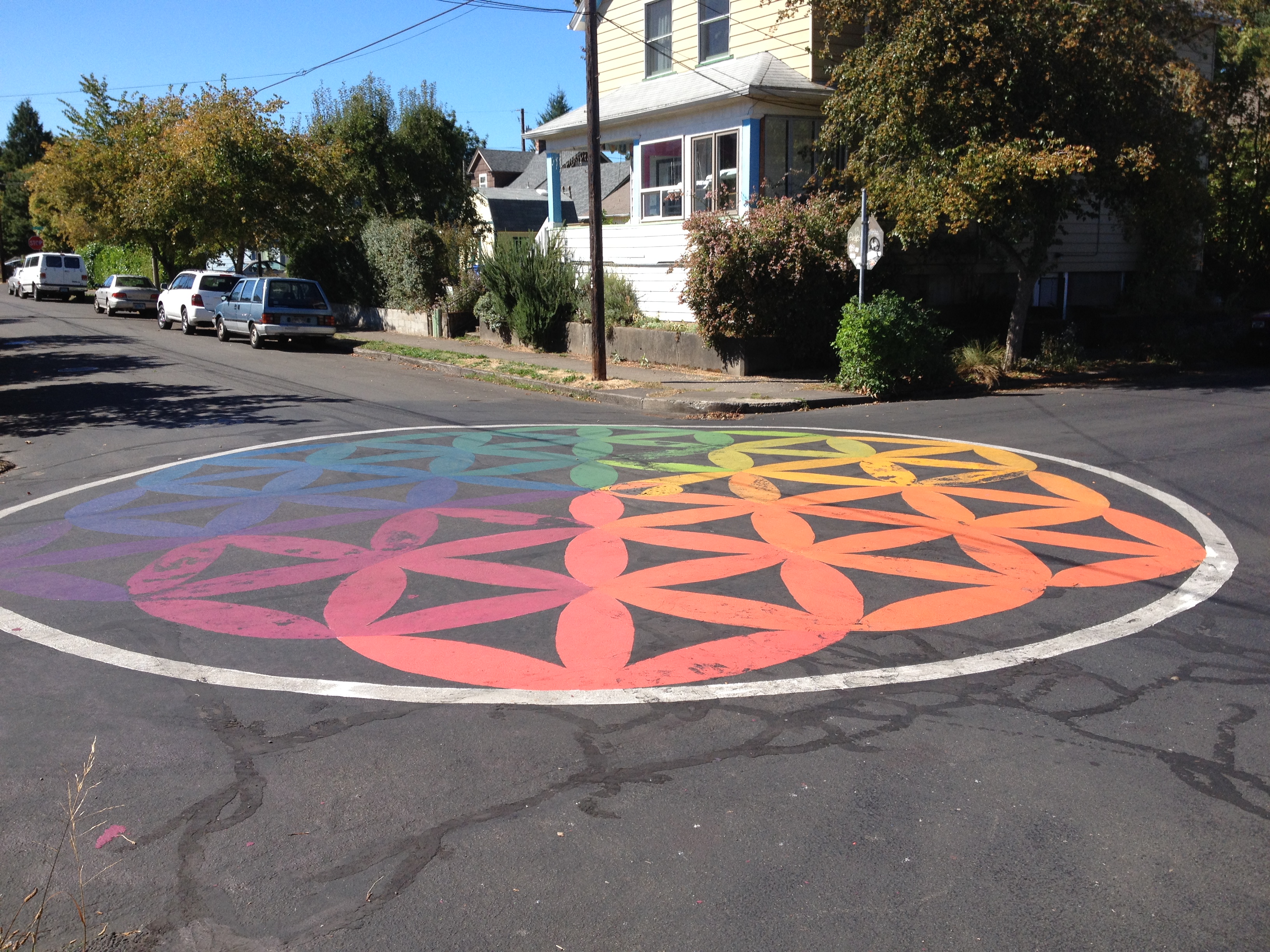
Spotted on a NE Portland street.
Junk as Art or Entropy or Dark Forces?


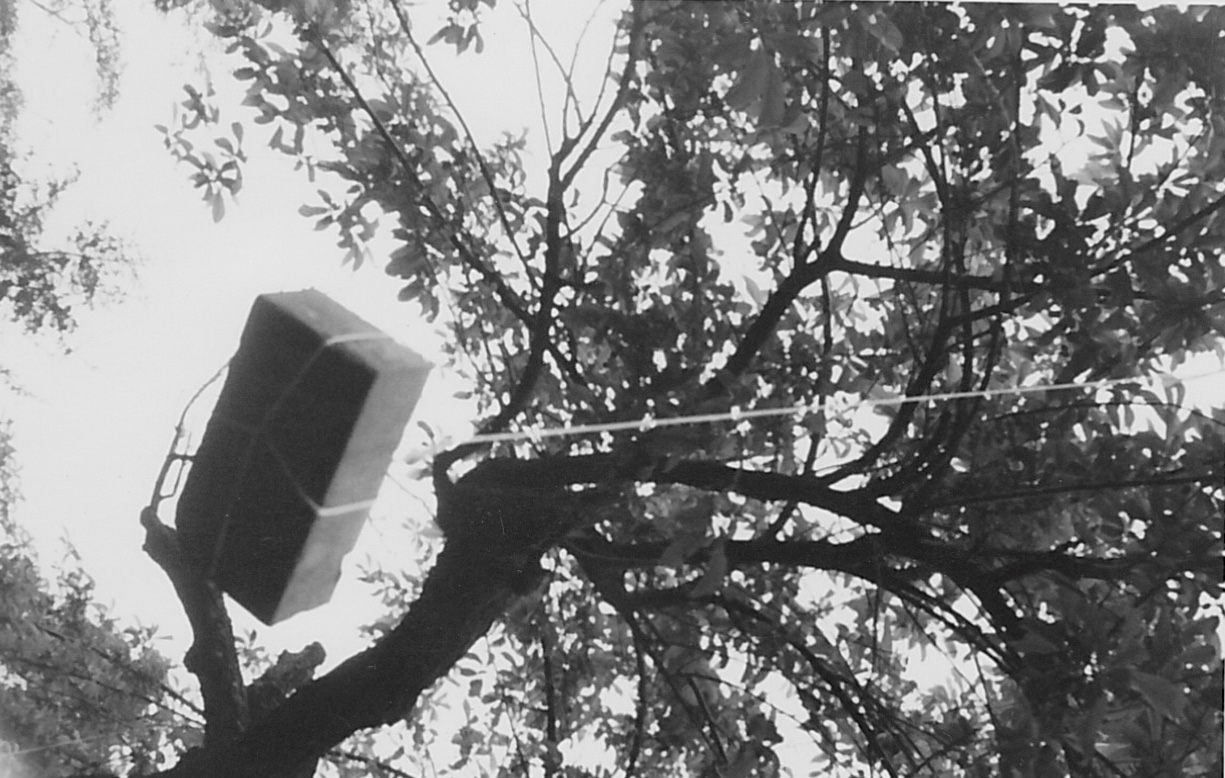
I posted these three images on my Instagram account late last night. After high school graduation I slipped away to spend some time with a friend who lived in East Oakland, CA. She had just finished remodeling her bathroom and so had left this pile of debris at the back of her yard. East Oakland was a very sketchy even dangerous place in 1970 ( but that is for another story). She hung bricks from her lemon tree and to me it was either just odd or perhaps even darker than odd: why would someone hang old, red bricks from a seemingly healthy lemon tree? My youthful imagination went into overdrive imagining all sorts of dark rituals or beliefs at work here. In reality, I suppose there was a very practical reason for the hanging bricks, but is sure looked odd.
Anyway, the images were old prints that I scanned into a PC last night. I think they were taken on my Agfa 35mm camera, but, 45 years later, I’m not sure.
For Friday
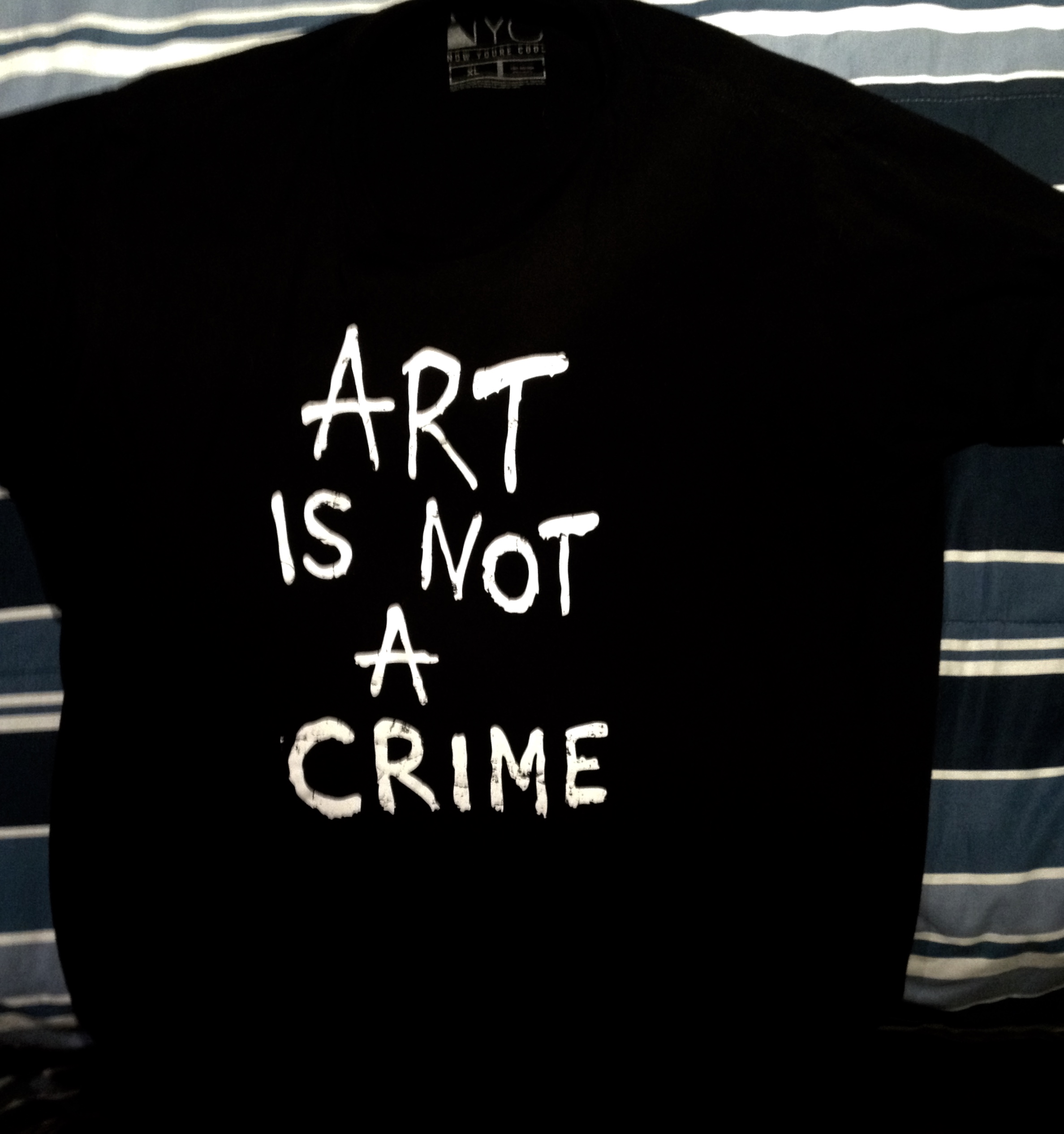
A street photographer in NYC put together a line of tee shirts, etc. with some interesting statements. I liked this one.
Just to Clarify……..
After years of doing this photoblog, more or less, in an anonymous manner I thought I should take a moment to explain what it is I do and maybe a little of the how and why.
When I started this photoblog I had absolutely no idea if or where it would go. After 6 years it seems to have a life of its own, which is fine with me. What has occurred to me often, over the life of this blog, is an omission of what exactly is my sense of photography, my approach and, given some minor ranting, the reason I have this working platform.
Most of you have probably guessed that I only use minimal post production editing ( lame way of saying I don’t spend most of my time after the shot working on an image). I have never used Photoshop or Lightroom, two of the most popular software editing packages. I do minimal color adjustments and cropping, all in iPhoto and then take the usable images and run them through Picassa only to reduce the size of the file and add a watermark. End of story. Most of my energy and time is spent getting the shot. I could go on an extended diatribe about Photoshopping or extensive editing, but will keep it short. I subscribe to a few photo mags and 99% of the amateur and pro images published have been run through Photoshop, etc. Pretty images……yes; artsy images….sometimes. REAL IMAGES? In my opinion, NO. Just lots of manipulation of tones and X’s and O’s to what end……..I don’t know. We have all seen images of fashion models, before and after……well, that is all you need to know. I knew someone in NY that used to do that as a full time job; take photographers images of models and rework them for publication. To me it is nothing more than slight of hand, trickery and misleading.
When I shoot an image I want to capture and freeze that moment in time as it really was: Reality, to me, is always more fascinating than the artificiality of darkroom manipulation. I see the camera as a partner in this effort to “freeze time”; a co-conspirator of sorts. I do my best to allow the camera to succeed in doing its part and try to not interfere too much after the shot.
By definition, if you have to put me in some sort of box, I am probably what is referred to as a Street Photographer. Some of my favorite photographers, living and passed, fall into this “box”. Most of my work is out on the streets of NY, Portland and Seattle ( with some traveling farther afield on rare occasions ). I love and hear music everywhere; the streets, buildings and sidewalks and my hope is to capture a bit of that rhythm of life that is all about us.
So, lacking a detailed bio on my blog, this might suffice ( and I kept my ranting to a minimum :-)).
Stepping Back
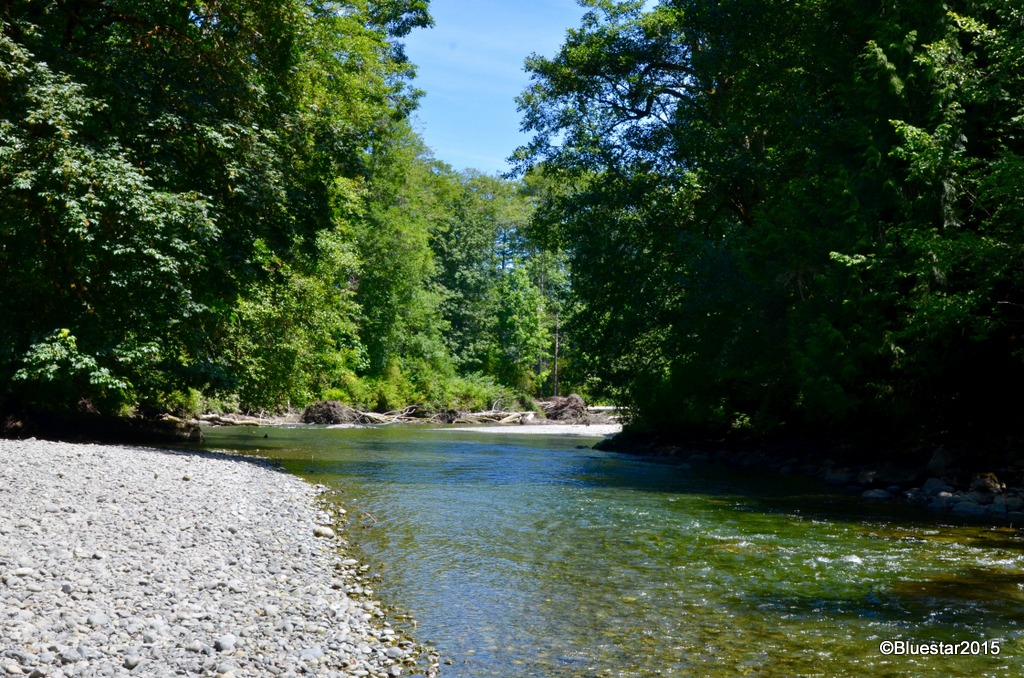
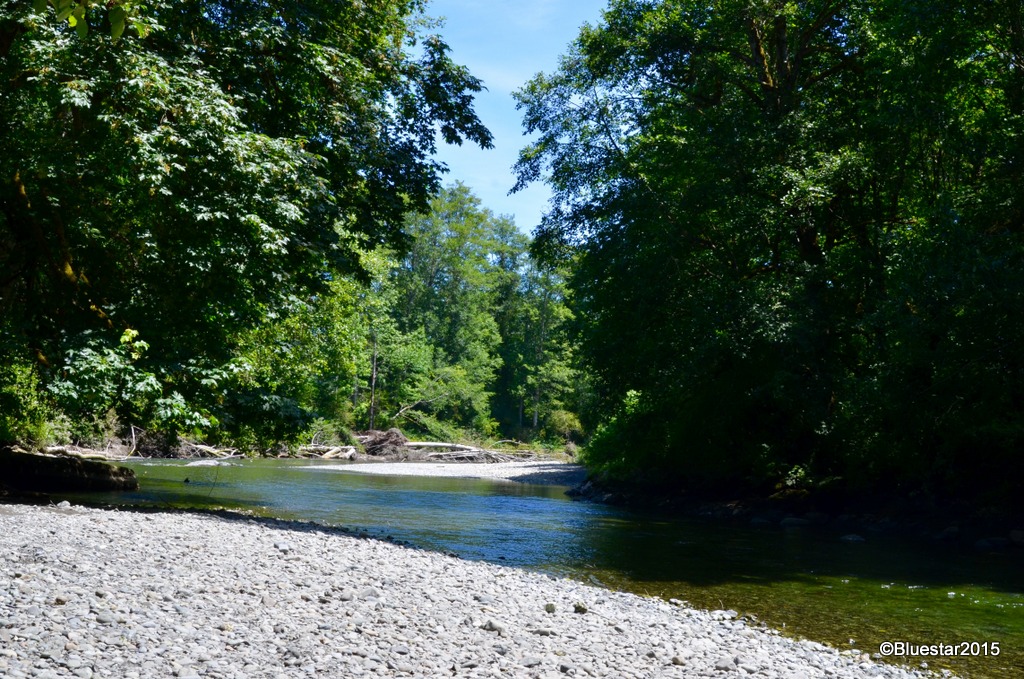
Stepping back from the image in yesterdays posting you can see the river is more rocks than river due to less runoff from the Olympic Mountains. In 50 years of visiting this area I have never seen the river this low in the summer.

Alberta St.
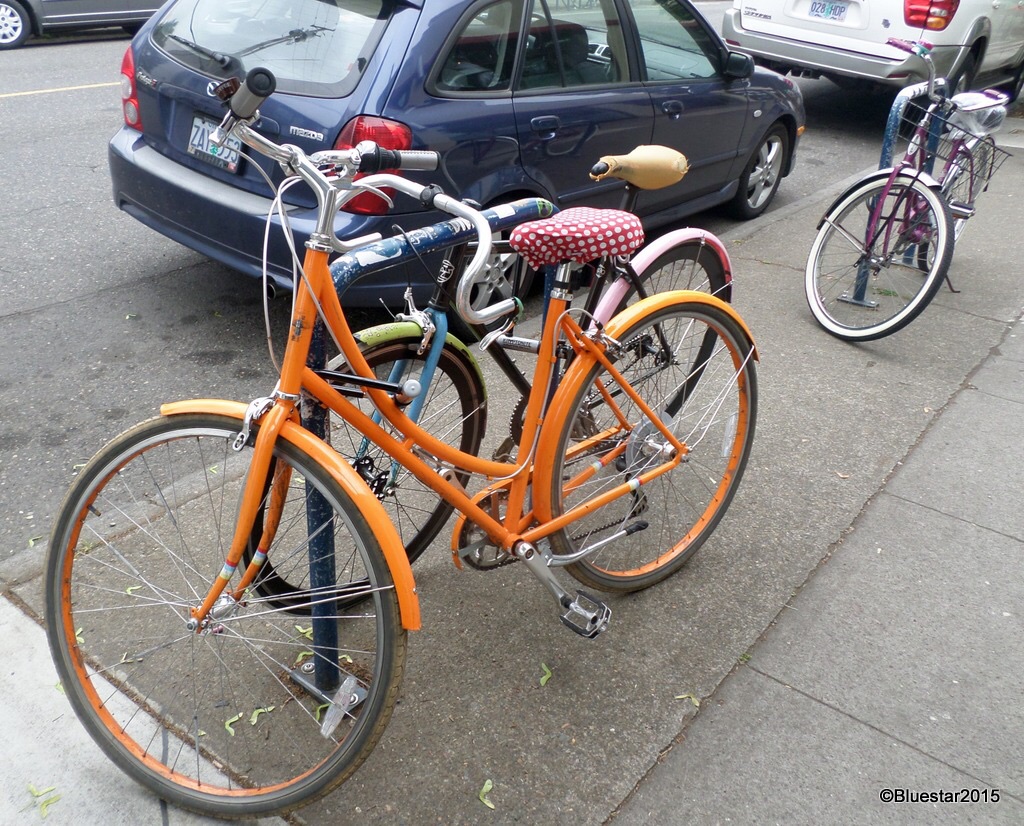
Posting from Portland this week.

Warning!
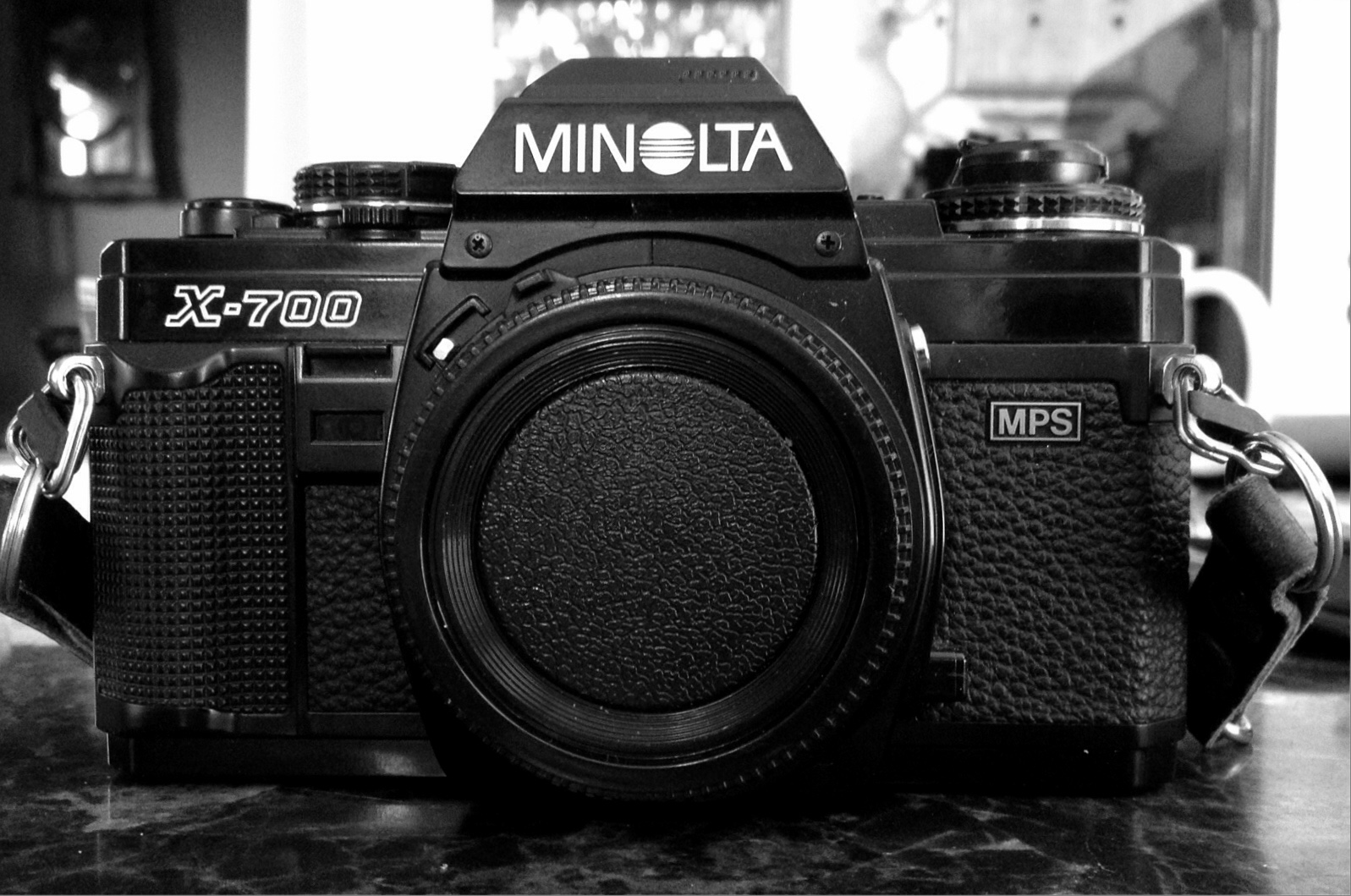
This device can be used to stop Time. Use with caution and creativity.
TBT: SF Gas Station, July, 1970

I’m not sure if this gas station is still there, but it was located about a block south of North Beach, in downtown San Francisco in 1970. I always thought it was odd that an Asian-themed design was not in Chinatown, but rather near the Italian section of SF. I guess Chevron, in their corporate wisdom, thought differently. This image was scanned from an old print shot on an Agfa 35mm camera.
Coffee with Charley: Fitting In
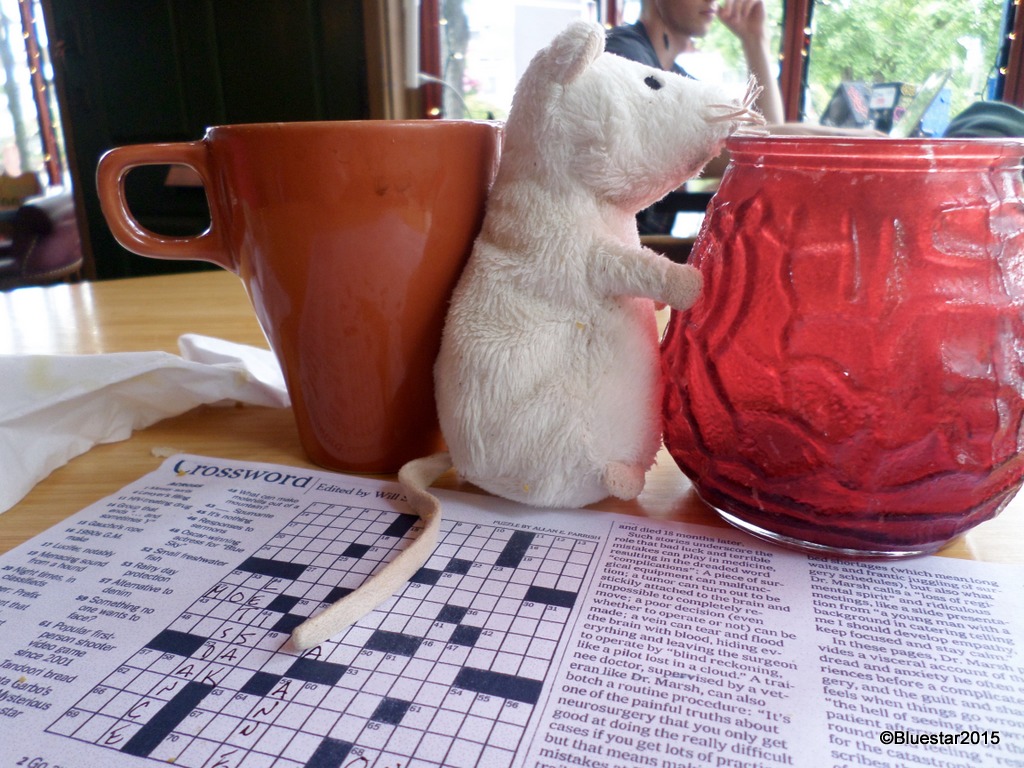
“I think I will do some discreet human watching. The patrons will think I am just a stuffed mouse”.
Coffee with Charley: Attention Issues
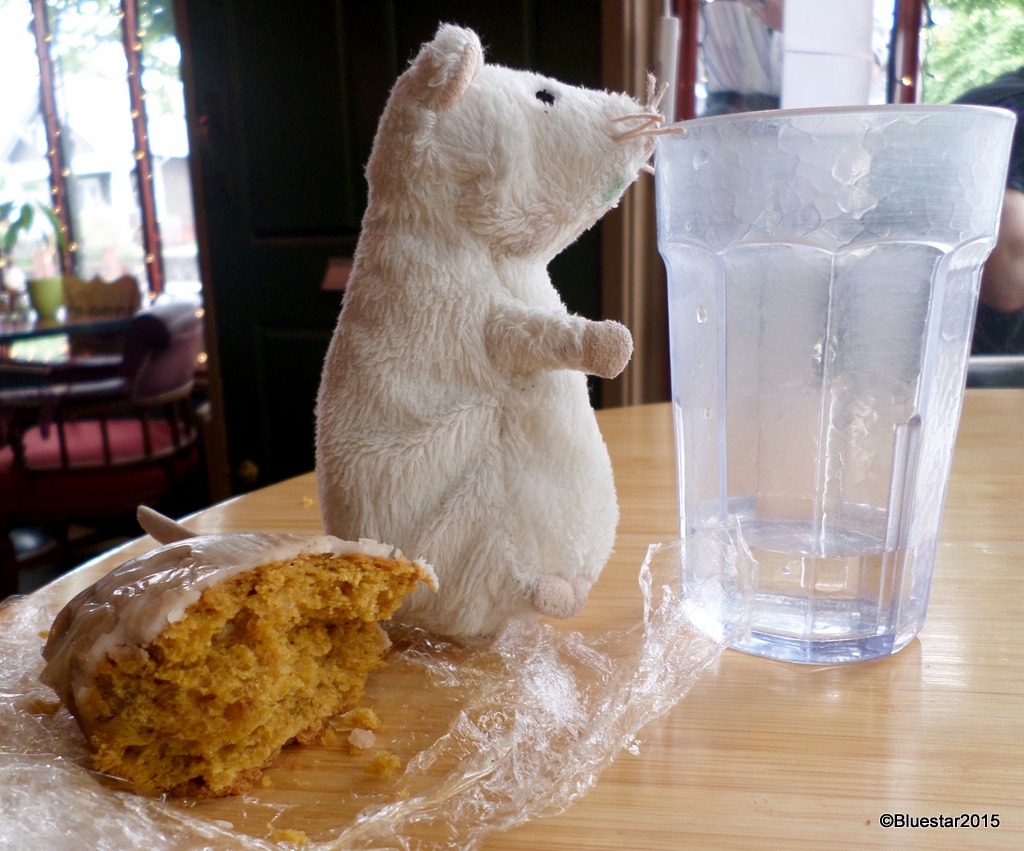
Hard to stay focussed on the crossword puzzle, even if it is Will Shortz’ NY Times version, when there is a PUMPKIN SPICE SCONE on the table!!


Coffee with Charley: Challenges
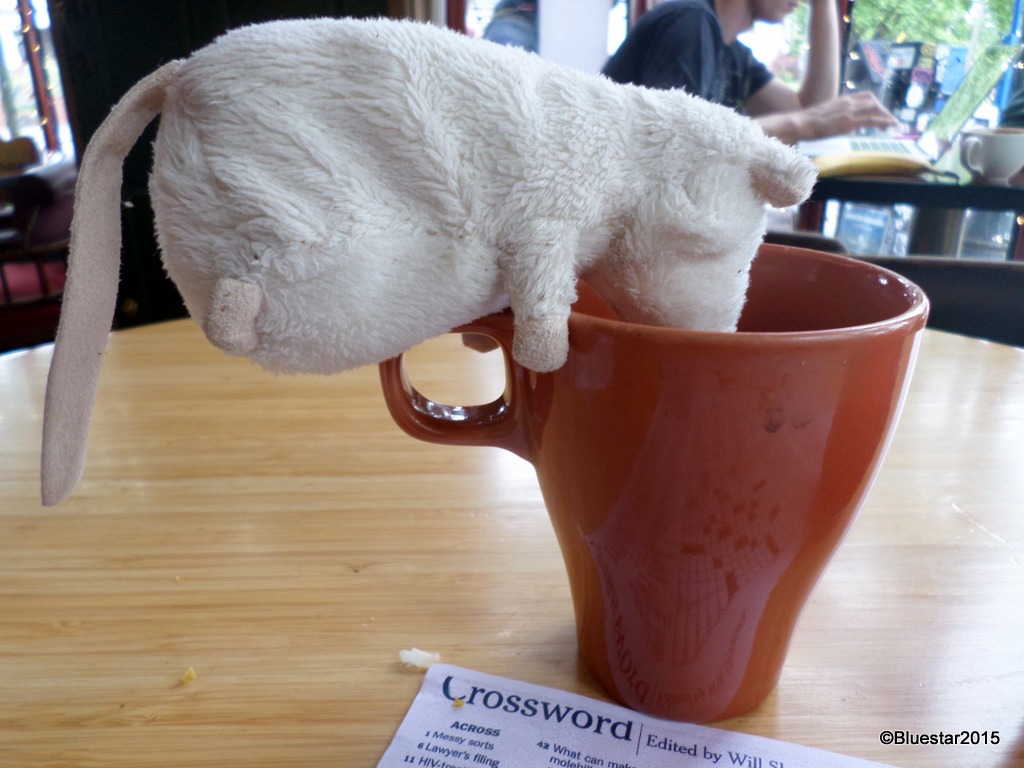
Being a mouse in a human world has its challenges. Charley has overcome the coffee cup challenge, but the water glass is another matter.
 Bluestar2012's Photoblog